
How to Transition Your Wardrobe From Summer to Fall Without Overheating
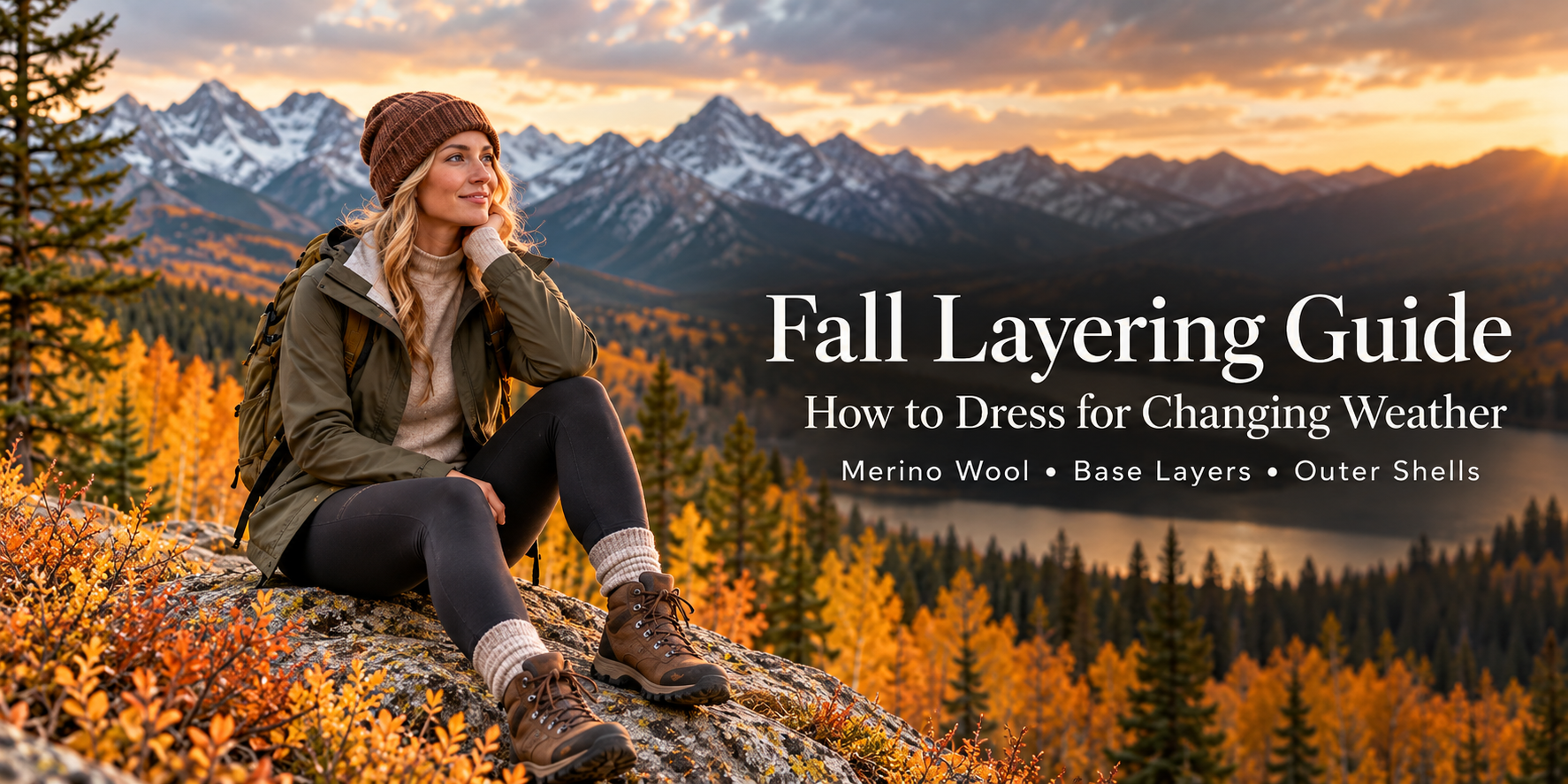
Summer has passed, mornings are colder, evenings are arriving earlier, and it is time to start changing how we dress.
That does not mean jumping immediately from linen dresses and lightweight summer clothes into bulky winter jackets. Fall is transitional weather. A cold morning can turn into a warm afternoon and then drop again as soon as the sun goes down.
The answer is layering.
I prefer to build a fall wardrobe around natural performance fabrics such as Merino wool, hemp, and organic cotton, then add lightweight weather-resistant outer layers that block wind and rain without making me overheat.
The goal is not simply to wear more clothes. It is to create a wardrobe you can adjust throughout the day.
Start With the Base Layer
Your base layer is the foundation of your fall wardrobe.
This includes:
socks
underwear
bras
leggings or long underwear
undershirts
lightweight base-layer tops
These are the pieces closest to your skin, so fabric matters.
I especially like Merino wool because it provides warmth without requiring a thick, bulky layer. Depending on the temperature, a lighter Merino around 150 gsm can work well as a transitional base layer, while heavier weights can be added as temperatures continue dropping.
Hemp and organic cotton can also be useful during mild fall weather, particularly when you do not need as much insulation.
The important thing is to start with a breathable foundation rather than piling heavy clothing on top of bare skin.
Socks Make a Bigger Difference Than You Think
Devold is probably my favorite brand overall for Merino basics.
Their Alpine Merino Sock Woman uses 65% Merino wool and is designed with extra ankle protection, a high calf, and anatomical shaping. Devold describes the sock as insulating and temperature regulating. Devold
Devold Alpine Merino Sock Woman
I particularly like wearing a three-quarter-length base layer that stops around my calf and then pairing it with tall Merino socks.
That gives me almost the feeling of wearing a full base layer without committing to a full-length legging.
There is another practical advantage: if I start getting warm during the afternoon, I can lower my socks and expose part of my calf. It sounds like a small adjustment, but that little bit of exposed skin can make a noticeable difference when you are trying to regulate your temperature without changing your entire outfit.
Your Second Layer Depends on the Day
The next layer may be a long-sleeve shirt, short-sleeve shirt, or another lightweight thermal layer.
This is where fall wardrobes become very personal.
Some people naturally run warm. Others are cold the minute the temperature starts dropping.
I do not like my arms being cold, so I generally choose a long-sleeve shirt.
If you run warmer, you might choose a short-sleeve shirt under your outer layer instead.
The advantage of choosing a long sleeve is that you can often wear a vest instead of a full jacket. Your core stays protected while your arms already have coverage.
That gives you another level of temperature control.
Merino Works Especially Well for Transitional Weather
Merino has become one of my preferred materials because it performs very differently from a basic synthetic fleece.
Mons Royale currently describes its Merino garments as temperature regulating, moisture managing, and odor resistant. The company also cites research conducted with North Carolina State University and The Woolmark Company that found substantially greater moisture-buffering performance for Merino wool compared with polyester. Mons Royale
That moisture management matters during fall.
You may leave the house cold, warm up while walking or biking, begin sweating, and then suddenly be standing outside in much cooler air.
A clothing system that manages both heat and moisture is far more useful than one that simply feels warm.
Three-Quarter-Length Leggings Are Excellent for Layering
One of my favorite styles for fall is a three-quarter-length Merino legging.
The Mons Royale Cascade Merino Base Layer 3/4 Legging is made from an 81% Merino blend and is specifically designed to reduce bulk around boots. Mons Royale lists the fabric at 180 gsm and describes it as temperature regulating and moisture managing. Mons Royale
Mons Royale Cascade Merino Base Layer 3/4 Legging
That length makes sense for me because I can combine the leggings with tall socks instead of stacking multiple layers around my ankles.
It is a small detail, but it makes boots considerably more comfortable.
Protect Your Core Without Overheating
Fall does not always require a full insulated jacket.
Sometimes a vest is enough.
If I am wearing a long-sleeve Merino layer, I may add a wind-resistant vest over it. This protects my torso while allowing more flexibility than a heavy jacket.
Your core is protected, but you still have enough ventilation to move around comfortably.
That becomes particularly useful while biking, hiking, walking through town, traveling, or doing anything where you are alternating between activity and standing still.
Wind Protection Is More Important Than Thickness
This is one area where I have become very particular.
A thick garment does not necessarily mean you will stay comfortable in wind.
Traditional fleece is generally synthetic, and depending on the construction, wind can pass directly through it. You may have what looks like a substantial layer on and still feel cold.
I prefer an actual wind-resistant outer layer.
For pants, I like Vaude biking pants because they can provide that extra environmental barrier without feeling like bulky winter clothing.
For my upper body, I have a lightweight Marmot windbreaker.
A good windbreaker can be surprisingly effective because its job is not necessarily to provide insulation. Its job is to stop moving air from stripping away the warmth your other layers have already created.
And when you no longer need it, a lightweight shell can often be folded down small enough to carry in a bag—or sometimes even a pocket.
That is exactly what I want from fall clothing.
Build an Outer Shell System
Eventually, fall becomes cold enough that wind resistance alone is not enough.
This is where I think about the wardrobe in two pieces:
insulating layer + protective shell
Your inner layers manage temperature.
Your outer shell manages the weather.
Depending on where you live, that shell may need to protect you from:
wind
rain
wet snow
sleet
sudden temperature drops
Instead of buying one giant coat and hoping it works for every possible condition, I prefer pieces that can work together.
On a mild day, wear the base layer alone.
When temperatures drop, add insulation.
When the weather turns wet or windy, add the shell.
That creates far more versatility.
A Merino Neck Warmer Is One of My Fall Essentials
I love keeping my neck warm.
What I do not necessarily want is a turtleneck attached to every shirt I wear.
A removable neck warmer solves that problem.
The Mons Royale Ascender Merino Neckwarmer uses a Merino/Tencel blend and is designed with different knit zones for warmth and ventilation. The current U.S. listing shows it at $44.95, so the $39.95 price you had originally noted appears to have changed. Mons Royale
Mons Royale Ascender Merino Neckwarmer
This is exactly the kind of fall accessory I like because it can be added or removed in seconds.
I feel the same way about beanies.
Small accessories give you much finer control over body temperature than immediately reaching for a heavier coat.
Do Not Forget Your Legs
Cold-weather leggings can function as either a base layer or a stand-alone athletic pant depending on the conditions.
Icebreaker's Women's Merino Speed Winter 25" Tights are currently listed at $160 and are made from 97% Merino wool with 3% elastane. They also use a double layer through the upper leg for additional warmth. Icebreaker
Icebreaker Women's Merino Speed Winter 25-inch Tights
You can wear this type of pant alone during cold-weather activity or place a shell over it when wind and precipitation become the bigger concern.
Again, the principle is the same: do not ask one garment to do everything.
Your Shoes Need to Transition Too
Fall is also when I start putting away shoes that leave my feet and ankles overly exposed.
Once temperatures really begin falling, I prefer my ankles covered.
Water resistance is also non-negotiable for me once wet fall weather begins.
A stylish shoe is wonderful, but it still needs to handle:
wet sidewalks
cold wind
light snow
long periods of walking
uneven terrain
I tend to prefer footwear that is flexible enough for normal walking and biking instead of an extremely rigid mountain boot.
That is one reason I gravitate toward Vaude footwear and similar European outdoor brands. I want a shoe that works with real life, not something that only makes sense when climbing a mountain.
The Best Fall Wardrobe Is Adjustable
The biggest mistake you can make with fall clothing is dressing only for the temperature when you leave the house.
Fall weather changes.
You may walk outside at 7 a.m. wearing everything you brought, remove two layers by noon, and need them all again by sunset.
That is why I build outfits around pieces that can be added, removed, folded, opened, lowered, or packed away.
A practical fall system might look like:
Merino socks + base-layer leggings + long-sleeve Merino shirt + vest + lightweight waterproof/windproof shell + ankle-covering waterproof shoes + removable neck warmer.
Every piece has a purpose.
And more importantly, every piece can work with something else.
Buy Fewer Pieces That Work Harder
Transitioning from summer to fall does not necessarily mean replacing your entire wardrobe.
It means changing the function of your wardrobe.
The linen that felt wonderful in July can move to the back of the closet. In its place, bring forward pieces made from Merino wool, hemp, organic cotton, and weather-resistant technical fabrics.
Start closest to your skin.
Add warmth only where you need it.
Then protect those layers from wind and moisture.
That is what makes fall dressing comfortable: not the heaviest coat you can find, but a wardrobe that adapts as quickly as the weather does.