
Everyday Ways to Boost Your Mental Wellness With Simple Habits
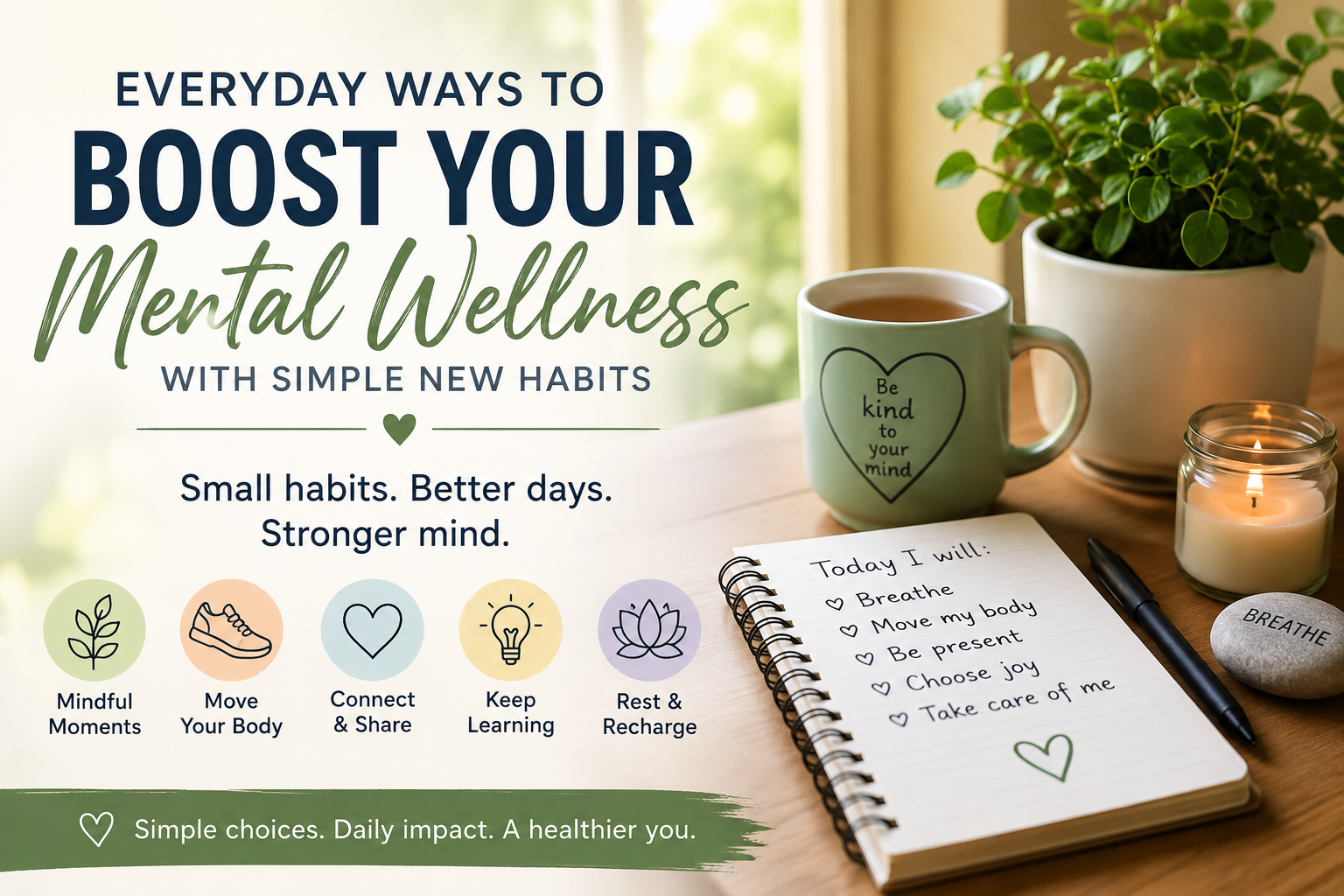
Busy parents juggling work, relationships, and a never-ending to-do list often treat everyday mental wellness as something to “get to” after everything else.
The tension is simple and exhausting: emotional self-care can feel either too time-consuming to sustain or too vague to trust, leaving even motivated general readers stuck in cycles of stress and self-judgment.
Mental health inspiration doesn’t have to come from big breakthroughs; it can start with small, realistic choices that fit the day that’s actually happening.
With a few unique mental health methods, mental steadiness can become a daily practice.
Understanding Mental Wellness Beyond One Solution
Mental wellness is bigger than a single tool. It can include therapy and medication, and it can also include small, repeatable practices that support you on ordinary days.
A useful mental wellness definition frames it as something you can build proactively, not just fix in crisis.
This matters because variety lowers the pressure to “do it perfectly.”
When one habit falls apart, another can still steady you.
Many people already use extra supports, and complementary health approaches have become far more common over time.
Think of it like a simple menu, not a strict plan. Some days you choose a five-minute walk; other days you choose journaling, a quiet shower, or a supportive call. The win is noticing what helps and repeating it gently. That same “small structure” mindset also makes career-aligned schooling feel like a stabilizing reset.
Use Purpose-Driven Learning to Create a Healthier Inner Pace
When mental wellness isn’t pinned to a single fix, it can help to choose a path that quietly organizes your days and gives your effort a direction.
Going back to school in a way that supports your career can be a powerful way to steady your inner pace: it adds structure to your week, builds a sense of forward momentum, and turns worry into something actionable, one assignment, one module, one new skill at a time.
For busy professionals, online degree programs make that growth more realistic because they let you learn without pressing pause on work or life.
If your work touches training or digital learning, a master’s in education technology and instructional design can be an especially confidence-building reset.
It equips instructional design professionals with current, practical skills, like design thinking, learning analytics, and accessibility, so you can create virtual learning experiences that are effective, engaging, and better suited to a rapidly evolving education landscape.
If you’re curious what that kind of program covers, you can read up on it and see whether it matches the direction you want to grow.
Try 9 Outside-the-Box Practices to Steady Your Mood
When you’re already building a healthier inner pace through purpose-driven learning, it helps to add small, mood-steadying rituals that don’t demand perfection.
Think of these as “electives” for your mental wellness, simple experiments you can rotate until a few feel like home.
1. Do a 10-minute “messy art” reset: Set a timer and fill one page with color, shapes, or collage scraps, no goal, no skill required. This leans into art therapy benefits by giving your feelings a safe container and helping your nervous system shift gears.
Try naming the page with one word afterward (“tired”; “hopeful,” “full”) to build emotional vocabulary.
2. Take a “syllabus walk” to discharge stress: Walk for 12–20 minutes with one intention: let your body process what your mind is studying. Spend the first five minutes noticing sensations (feet, air, sounds), then the next five recalling one concept you learned recently, then finish by choosing one tiny action for tomorrow.
Physical movement supports mental health partly because it interrupts rumination and gives your brain a clean transition between effort and rest.
3. Practice micro–forest bathing wellness on your block: You don’t need a national park, find the greenest route you can and move slowly for 15 minutes, pausing at three “anchors” (a tree trunk, leaf pattern, cloud texture).
A public opinion survey found 60.2 percent of respondents in Japan wanted to do walking in the forest to improve physical and mental health, which is a good reminder that nature-based mindfulness can be both simple and culturally intuitive.
4. Try “beginner tai chi” as a moving breath practice: Pick 3–5 slow movements you can repeat for 8 minutes, shift weight, raise/press hands, gentle turns, and match each motion to a long exhale.
Tai chi mental benefits often show up as steadier attention and a calmer body, especially when you practice at the same time each day.
If you’re busy, do it between work and study as a transition ritual.
5. Use birdwatching as mindfulness, not achievement: Choose one spot near your home and watch for 5 minutes, focusing on shapes, hops, and songs rather than identifying species. When your mind wanders, return to one question: “What is the bird doing now?”
This trains attention the way meditation does, but with built-in variety.
6. Volunteer in “one small task” doses: Volunteering and emotional health often connect through meaning, social contact, and the quiet pride of being useful. Commit to a single, repeatable role for four weeks, packing boxes, greeting, tutoring, cleanup, so it supports your schedule the way a class does.
Keep it sustainable by choosing a shift length you could still do during a stressful week.
7. Build a pet-friendly routine (with or without owning one): Pet ownership can impact mental health by adding structure, touch, and companionship, but it’s also a real commitment.
If ownership isn’t right, borrow the benefits: offer to walk a neighbor’s dog twice a week or spend 15 minutes calmly playing with a friend’s cat.
The goal is consistent connection, not constant caretaking.
8. Create a “two-senses” grounding kit for hard days: Put 3–5 items in a small pouch that engage touch and scent, smooth stone, textured fabric, tea bag, gentle lotion.
When you feel wobbly, spend 90 seconds noticing one texture and one smell while breathing slowly.
This is creative expression and wellbeing in miniature: you’re designing an environment that helps you feel safe.
9. Do a weekly “mood lab” reflection to keep what works: Once a week, write three lines: what lifted me, what drained me, what I’ll repeat.
Treat it like coursework, data, not drama, and choose one practice to keep for the next seven days.
Over time, these experiments become a routine you can trust, even on skeptical or low-motivation days.
Mental Wellness Habit FAQs: Time, Cost, and Safety
Q: How can I fit a mental wellness habit into a packed day?
A: Choose a “minimum dose” that takes 2 to 10 minutes and attach it to something you already do, like after coffee or before your shower.
If you miss a day, restart without making it mean anything about you.
Consistency grows from ease, not intensity.
Q: What if I can’t afford classes, supplies, or apps?
A: Many mood-supporting habits are essentially free: a short walk, slow breathing, noticing nature, or a three-line reflection.
Use what you already have, like scrap paper, a pen, or a small pouch for grounding items.
If you want structure, look for free videos or library programs.
Q: How do I stay motivated when I’m already tired?
A: Make the goal “show up,” not “feel better.”
Set a timer for 90 seconds and stop when it ends, even if you could do more.
Energy often follows action, especially when the action is kind and small.
Q: Can these practices replace therapy or medication?
A: These habits can support your wellbeing, but they are not a substitute for professional care.
If you’re struggling to function, feeling unsafe, or your symptoms are worsening, reach out to a clinician or trusted support.
You can do both: care plus calming routines.
Q: Should I avoid any of these if I have anxiety, trauma, or chronic pain?
A: Start gently and prioritize practices that help you feel grounded, not pushed.
Keep movements slow, choose familiar routes, and stop if you feel dizzy, overwhelmed, or more activated.
When in doubt, check in with a healthcare professional for personalized guidance.
Building Sustained Emotional Wellbeing Through One Daily Habit
When stress and uncertainty pile up, it’s easy to overthink self-care, lose mental health motivation, and quit before anything can take root.
The steadier path is a gentle, reflective approach: choose one of the reflective wellness practices that feels doable, repeat it as a small experiment, and stay curious about what it changes.
Over time, daily mental health habits stop feeling like chores and start becoming a unique self-care commitment that supports sustained emotional wellbeing.
Small, repeated choices are how wellbeing becomes real.
Choose one practice to try for the next seven days, and notice one shift in mood, energy, or patience. That kind of attention builds the resilience and steadiness that carry into every part of life.