
Beyond the Empty Nest: Reclaiming Purpose, Peace, and Possibility
Beyond the Empty Nest: Reclaiming Purpose, Peace, and Possibility
When the kids move out, the quiet can feel both liberating and disorienting. For many new empty nesters, this stage brings an unexpected mix of pride, loss, and opportunity. This is your time to redefine daily rhythms, reconnect with passions, and rediscover the balance between doing and simply being.
When the quiet starts feeling heavier than expected, a guided meditation session can help you calm your nervous system, settle the mind, and reconnect with the part of you that is ready for this next chapter.
Hot Takes
Becoming an empty nester opens a chapter of renewal — not emptiness. The key is to intentionally rebuild purpose through hobbies, friendships, volunteer work, and restorative downtime. Start small, experiment widely, and organize your life around joy, not obligation.
Why This Moment Matters
Psychologists describe the “post-parenting gap” as both an emotional and practical reset. After years of scheduling around others, it’s time to re-center on yourself — health, purpose, and connection.
It’s also a stage rich in opportunity: travel, skill-building, entrepreneurship, or even teaching what you know to others through mentoring or courses.
If you are standing at the edge of a new identity and wondering what comes next, a psychic tarot reading can help you find clarity, direction, and confidence before you make your next move.
Ways to Find Fulfillment
● Rediscover hobbies you once loved — painting, hiking, gardening, or photography.
● Learn something new. Online learning platforms like Coursera or Skillshare can reignite intellectual curiosity.
● Strengthen social circles. Join local meetups on Meetup.com or volunteer through VolunteerMatch.
● Invest in wellbeing. Explore mindfulness apps like Headspace or build routines with fitness communities like FitOn.
● Travel purposefully. Slow travel or cultural volunteering lets you explore while giving back — check Workaway.
Checklist: Building Your New Routine
Use this checklist as a gentle framework for creating balance in your next chapter.
✅ Health & Wellness — Move your body regularly and fuel it well. Join a walking group, try online yoga, or create a simple morning stretch habit.
✅ Home Environment — Refresh your surroundings. Redecorate one room, start an indoor garden, or donate what no longer fits your lifestyle.
✅ Social Connection — Rebuild community intentionally. Host monthly dinners, join local hobby groups, or volunteer for a cause that inspires you.
✅ Purpose & Passion — Identify what makes you feel useful and alive. Explore mentoring, part-time work, or creative projects that bring meaning.
✅ Learning & Growth — Keep your curiosity active. Enroll in a short online course or learn a new skill just for the joy of it.
✅ Finances & Planning — Revisit your long-term goals. Adjust savings, insurance, or travel plans to align with your new lifestyle.
✅ Rest & Renewal — Protect downtime. Schedule quiet mornings, reading breaks, or nature walks to restore balance.

Staying Centered Through Simple Organization
When life suddenly feels more spacious, a little structure can go a long way. Creating order in your physical and digital spaces helps calm the mind and reinforces a sense of control.
Start by gathering important documents — medical files, financial papers, travel plans, even old family mementos — and digitizing them. Storing them as PDFs keeps everything consistent and easy to find when you need it.
If you’d like to make small changes or add notes, free PDF editor tools make it simple to update documents without having to reformat or convert files.
Think of this not as “organizing paperwork,” but as creating peace of mind — a quiet kind of stability that supports you as you step into what’s next.
How to Create a Balanced Week
Designate “anchor days.” Set two or three recurring days each week for key activities (e.g., exercise, volunteering).
Build in downtime. Treat rest as a task worth scheduling — time for reading, reflection, or a walk.
Set learning goals. Each quarter, pick a new subject or skill to explore.
Reconnect intentionally. Schedule calls, trips, or shared meals with loved ones.
Track your energy. Use a simple planner or digital tracker like Todoist to monitor when you feel most productive or peaceful.

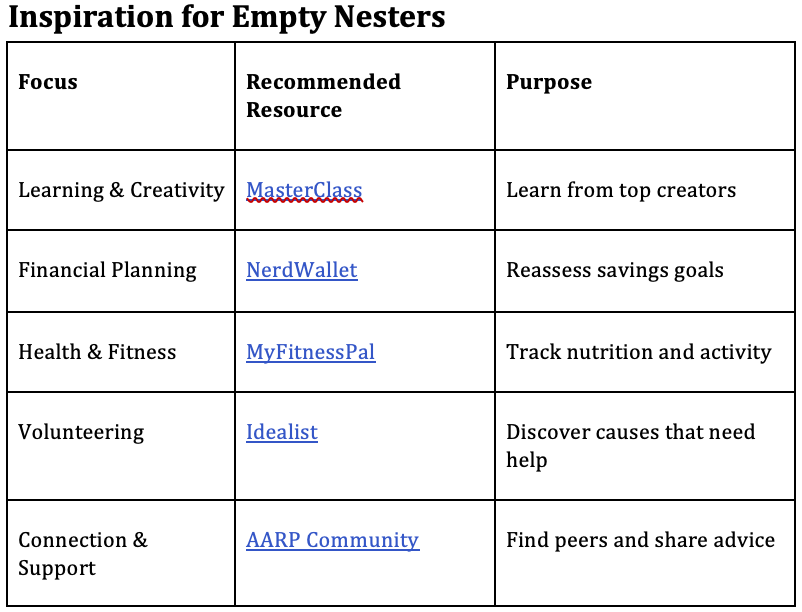
Focus: Learning & Creativity, Financial Planning, Health & Fitness, Volunteering, Connection & Support
Recommended Resource: MasterClass, NerdWallet, MyFitnessPal, Idealist, AARP Community
Purpose: Learn from top creators, Reassess savings goals, Track nutrition and activity, Discover causes that need help, Connection & Support, Find peers and share advice
Spotlight: The Joy of Home Renewal
Refreshing your environment can be a creative outlet. Rearrange furniture, start an indoor herb garden, or invest in a simple home improvement project. For small DIY inspiration, browse Houzz — a site full of practical design ideas and community tips to bring warmth back into your living space.
Glossary
● Empty Nest Syndrome: Feelings of sadness or loss when children leave home.
● Anchor Days: Pre-planned days dedicated to specific recurring activities.
● Purpose Mapping: The act of aligning activities with personal values and long-term goals.
● Digital Declutter: Organizing and minimizing digital files for clarity and security.
Conclusion
This next chapter is not about filling empty space. It is about becoming available to your own life again.
Start with one small rhythm that brings you peace, one relationship that brings you joy, and one choice that reminds you who you are becoming.
When you are ready for deeper support:
• Calm your nervous system → Guided Meditation Session
• Get clarity for your next chapter → Psychic Tarot Reading